
Thinking about Telegram channel promotion but not sure how to grow subscribers efficiently? Or is growth not the problem, and the real question is how to monetize those subscribers? In this article we cover both. DNA Traffic Lab has been promoting channels across different niches for a while, and we're glad to share what works with channel owners just getting started. We'll walk through three directions: paid traffic on Meta and TikTok, Telegram Ads, and free methods.
What are the ways to promote a Telegram channel?
There are three main methods: paid traffic on Meta and TikTok, in-app advertising through Telegram Ads, and free methods (organic/UBT traffic).
- Paid traffic on Meta and TikTok. The fastest and most scalable way: ads send people to your channel and you pay for results.
- Telegram Ads. Ads on themed channels where the audience is already interested in your niche. More expensive, but more targeted.
- Free methods (UBT). Semi-free traffic through mass posting. Slower, but no ad budget.
Let's break down each one.
How do you advertise a Telegram channel with Meta and TikTok?
With paid targeting you drive people to the channel through ads, and the cheapest route is an Instagram-to-Telegram funnel.
The idea is the link between an expert's Instagram and their Telegram channel. You grow both at once: subscribers on Instagram and traffic into Telegram. Unsubscribes stay within about 25%, and even accounting for them the cost per targeted subscriber stays low. The upside: besides your main monetization in Telegram, you also monetize the audience at the Instagram expert-blog stage.
What you need:
- the expert's Instagram;
- the expert's Telegram channel;
- a Telegram bot for purchase pushes and announcements;
- 10 Reels with different angles — these go into the ads.
The trick is that you don't need Ads Manager: everything runs through Business Suite boosts. We've found this brings cleaner traffic than standard Meta Ads launches, and cheaper — the average cost per Instagram follow comes to $0.3–1 depending on the niche. The main challenge is scaling, but that's manageable if you know the platform's quirks. We do.
Once everything is ready, gradually upload the Reels to Instagram and move to launch. Here's the step-by-step (Meta's interface changes from time to time, but the logic stays the same).
Step 1. Go in through Ads Manager or straight to business.facebook.com.
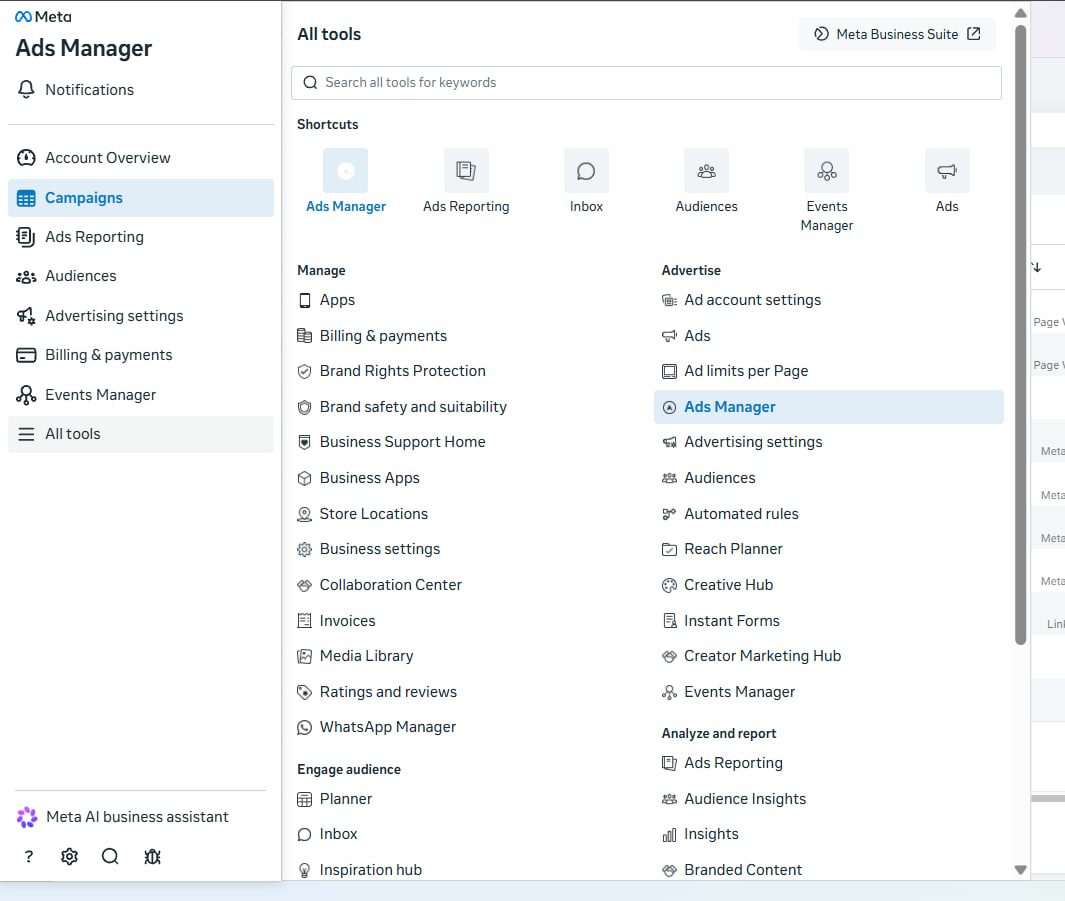
Step 2. Find the Create Ad button.

Step 3. You land in the interface where you pick a goal based on your task. We recommend Engagement.
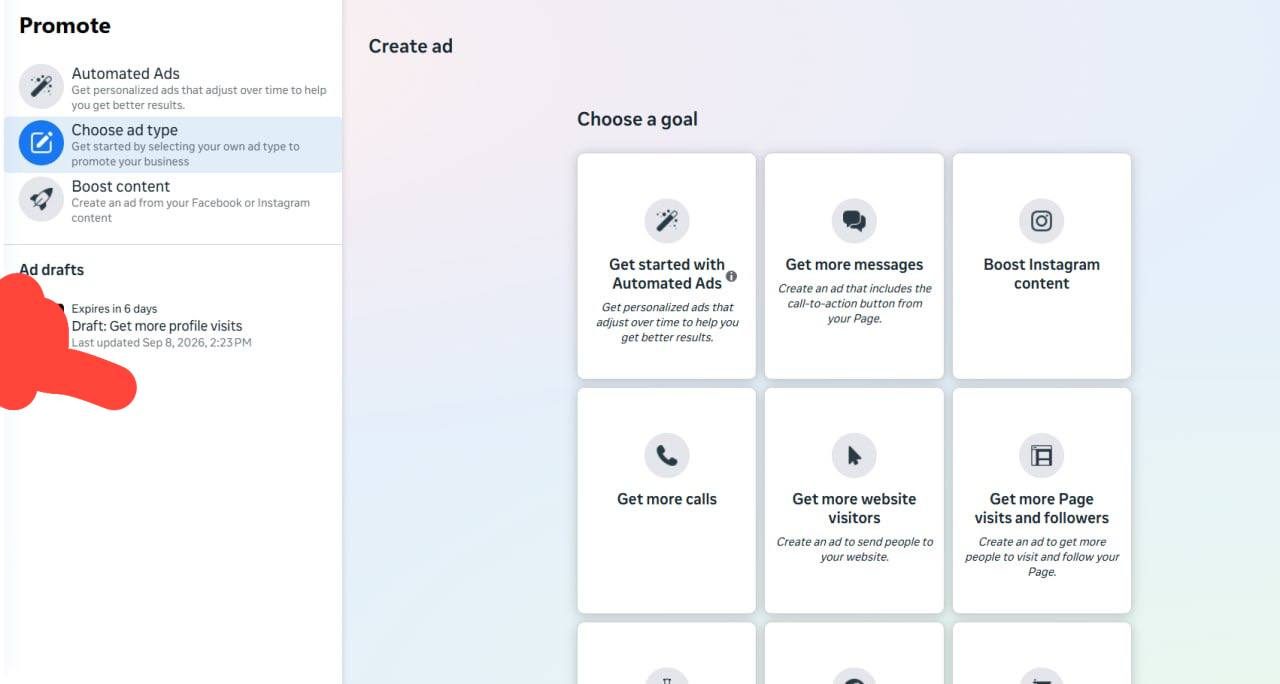
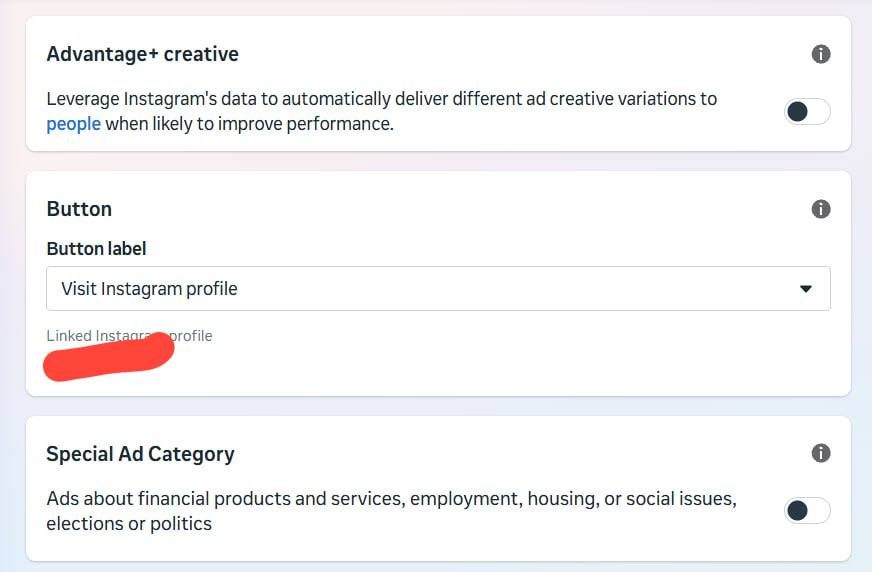
Step 4. Turn off the Advantage+ creative checkboxes, pick a CTA, and leave special category off.
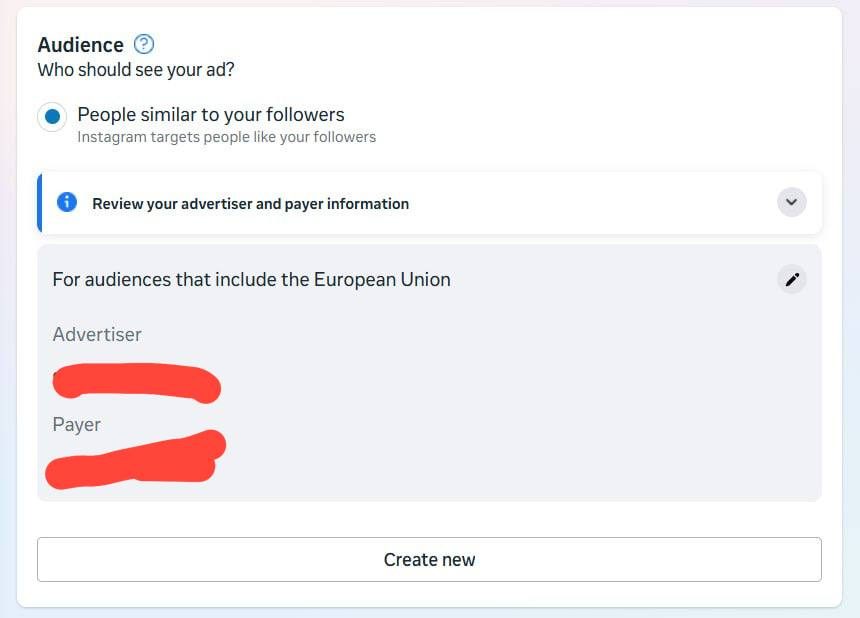
Step 5. Choose your audience — prepare it in advance in Ads Manager or use the simplified version via Create New.
Step 6. Set the budget, skip the end date if you don't need one, and publish.
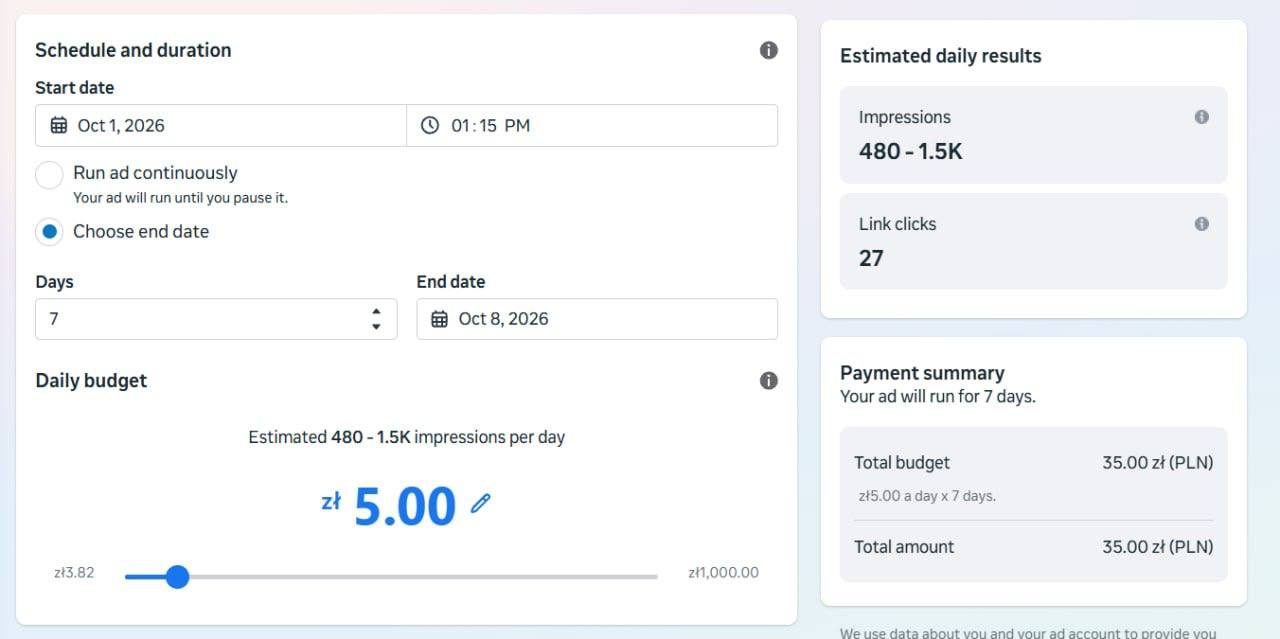
That's it — hit Publish and repeat with the remaining Reels. Keep budgets small: up to $5, or $2–3 per video. That gives you 10 Reels running non-stop and steadily bringing subscriptions.
One caveat: you need to think through the scenario and the reason a user clicks through, or there won't be results. These are just the basics — full-scale work is far more complex, and we tailor the traffic path to each project. But this is enough to test how the approach works. Cost per subscriber, as mentioned, runs $0.3–2 depending on niche, volume, creative and geo, and if everything is already set up and thought through, this traffic can pay back up to 80% in the first week.
Next, you move Instagram followers into Telegram. There are many ways; one of the most effective is a lead magnet — something useful a person gets for free in exchange for an action. The lead magnet has to be built well, so the subscriber sees a "wow" and realizes your product is exactly what they need.
How is Telegram Ads different from targeting?
Telegram advertising inside the app itself is Telegram Ads — a built-in tool that shows ads on themed channels where the audience is already warmed to the niche.
There are three account types: Stars, TON and the EU cabinet. We'll cover TON — the EU cabinet costs from $500 through an agency, and without €2M in turnover Telegram simply won't open it for you, plus heavy bureaucracy.
The main advantage of Telegram Ads: you appear on themed channels — a kind of built-in interest targeting. You can promote a channel or a bot; external links are not allowed.
The downsides: you can't choose optimization, you pay only for impressions, and you can only place a short message with an image. So there's no guarantee of click-throughs — hooking someone in that format is harder than in Meta. It fits if you have enough budget; otherwise there's no point. Telegram Ads works best for crypto projects.
In short: Meta targeting is cheap and scalable but needs a funnel; Telegram Ads is expensive but hits a targeted audience; UBT is free but slow. We'll publish a detailed Telegram Ads guide later — this is just the intro.
Can you promote a Telegram channel for free?
Yes, but it's labor-intensive. Free promotion mostly comes down to two approaches.
- UBT traffic — semi-free traffic through mass posting on TikTok and Threads from many accounts. The most effective of the free methods.
- Collaborations, cross-promotion, seeding — workable but slow, and the time spent often isn't worth it.
So if you need to grow fast and at scale, use paid methods (Meta Ads, TikTok Ads). If you're fine with smaller volume and a slower pace, use UBT.
How much does a subscriber cost and what affects the price?
Cost per subscriber usually runs $0.3–2, and the exact figure depends on niche, geo, product, creative and even budget size.
Yes, budget matters directly: with $50 to spend you simply won't have time to learn what works, and you won't reach the right cost. Creative matters too — how you present the information, how the person perceives it, and what they get after the click.
Also factor in the number of steps before a subscribe: at each funnel stage a share of people drops off. But sometimes a long funnel pays off — the subscriber costs more yet brings far more revenue than a hundred cheap ones. It's all situational, and each project needs its own approach. For reference: in crypto we held subscribers at $1.4 — see our crypto channel promotion case study.
It's not simple work — which is exactly why DNA Traffic Lab takes it on and gives you peace of mind over your traffic and its payback.
How do you avoid wasting budget — why warm-up matters
The main rule: don't run traffic without warm-up — without a funnel, even a cheap subscriber won't pay off.
A simple example to make it clear. Say you want to find clients and make money from ads. Maybe you don't have much money — or you do, doesn't matter. You come across an ad or an "expert's" video on Instagram, and in it he hits something sitting in your head — say, trouble finding clients. He frames it so that you first hesitate, but still tap through to the profile. Two outcomes: if the profile is empty or not what you expected, you just leave; if it's packaged right, you start scrolling, checking comments, watching the expert. At the second outcome you've already entered the funnel.
Over time you notice the expert keeps trying to move you to a Telegram channel — telling you you'll get knowledge or something useful there. Out of curiosity you go, and it really does deliver what was promised, and more. And here's where it gets interesting: you've already subscribed. You could call it "goal achieved" — if the goal is just subscribers. But we want to earn.
Once inside the channel, you've gotten warmer and your trust in the expert has grown a bit, but you're not ready to buy yet. So you scroll the feed, see what's in the channel, find reviews and results from people who took the leap. And what happens next? However conservative you are, sooner or later you warm up and go to the expert for the product yourself. You're constantly led by the hand, warmed up, given value — and there's no option to say no: you've got the motivation, the trust and all the information you need. You buy.
That's the whole logic of why warm-up matters: without it you just waste budget. You have to work on every stage — not just package things nicely, but package them so people want to buy. DNA Traffic Lab helps with this too.
Quick checklist:
- define why people should come to you and buy;
- map how you'll guide a subscriber to purchase;
- prepare the Reels and creatives, set up the logic;
- warm the audience up continuously (many ways to do it);
- and only then move to paid traffic.
This isn't the only path: many projects don't need Instagram at all, and the work runs through other funnels. We have proven approaches even if you don't run an expert blog.
Frequently asked questions
How much does it cost to get a Telegram subscriber?
Usually $0.3–2 depending on niche, geo, creative and budget. Through the Instagram + Business Suite boosts combo it can reach $0.3–1; in competitive niches like crypto it's higher.
Which is more effective — Meta targeting or Telegram Ads?
Meta targeting is cheaper and scales more easily but needs a funnel and warm-up. Telegram Ads hits an already-interested audience on themed channels, but it's pricier and only fits when you have enough budget.
Can you grow a Telegram channel without spending money?
Yes, through UBT traffic (mass posting on TikTok and Threads) and cross-promotion, but it's slow and labor-intensive. Fast, high-volume growth needs paid traffic.
Why do subscribers keep coming after the ads stop?
These are "overflow" subscribers — organic inflow from ads already seen and from reposts. They're counted separately from paid subscribers, otherwise the cost per subscriber gets distorted.
Want a steady flow of subscribers and a funnel built to monetize? Get in touch and we'll shape a strategy for your project.
About the author: Kiryl Novak — founder of DNA Traffic Lab, a performance marketer and media buyer with experience across e-commerce and high-competition verticals on Meta and TikTok. He likes challenging conventional marketing wisdom and optimizing for simplicity and efficiency.


