Account structure that survives review, creative tested at volume, and the operational discipline that keeps accounts running: permissions obtained before launch, spend introduced in stages, business details that match across every asset, and a documented plan for the day something is switched off.
What the work actually is
Meta is the largest source of cheap attention available and the least forgiving place to spend
money if your category is on its restricted list. The mechanics are the same as anywhere: audiences,
placements, creative, budget. What differs is the cost of a mistake. Elsewhere it buys a bad week.
Here it can cost the account, and with it the history that made the account work.
Permission comes before setup
Most of the restricted list is not banned — it is gated, and each gate is different. Dating
advertisers need written permission from Meta before running at all, granted per market. iGaming
needs an application plus a licence valid in each targeted country. Employment, credit and housing
run inside a special ad category where age, gender and detailed location targeting are unavailable.
Health and supplement claims are policed against a separate standard again.
Which of these applies decides the campaign structure, the audience plan and often the market
list. So it gets established before anything is built rather than discovered in a rejection, and
you are told plainly which route your business is on: permitted and paperwork-heavy, or outside the
permitted set with the account risk that carries.
Account structure
The structure follows one rule: no single point of failure. Spend is spread across more than one
business manager and ad account rather than concentrated in whichever is currently performing.
Business details — the legal entity, the domain, the payment method — match each other everywhere
they appear, because a mismatch is the most common trigger for a review nobody asked for. Domains
are verified wherever verification exists.
- Spend is introduced in stages rather than switched on at target, which is what review looks at.
- Replacements are prepared while everything is working, not after it stops.
- Pixels, catalogues and domain settings are documented, so a rebuild is a checklist rather than
an archaeology project.
Creative
Meta's optimisation needs volume, and restricted categories consume creative faster than
unrestricted ones, because the angles that perform are exactly the angles review examines hardest.
We produce in sets, test on a structured rotation, and keep a written record of which angle was
rejected and under which policy. That record is what stops the same idea being resubmitted under a
new filename three weeks later.
The record also compounds across clients in a way nothing else does. Knowing that a particular
phrasing about results triggers the health standard is worth more to a clinic than another round of
design.
Landing pages are part of the ad
Review reads the destination, not just the creative. A page promising something the ad did not,
or making a claim the market does not permit, is the most common reason an otherwise sound campaign
is stopped. Pages are checked against the applicable policy before launch, not after.
When something is switched off
Sooner or later it will be. The plan is written before launch: which account takes over, which
creative set moves with it, who files the appeal and what the appeal says. Appeals are worth filing
— a meaningful share succeed — but an appeal is not a strategy, and waiting on one with nothing
running is how a week disappears.
What you see each week
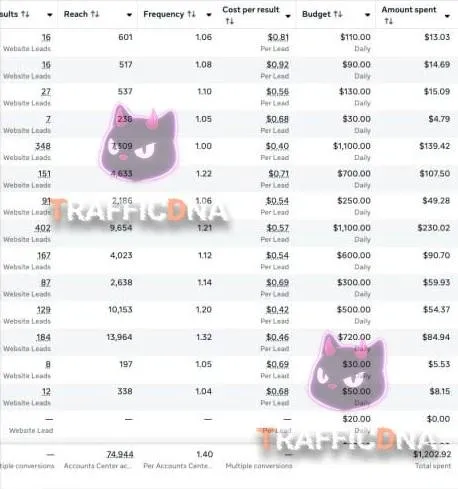
Spend, results, and the changes we made, in that order. Where conversion tracking can be trusted,
figures come from the platform and from your own system, and the gap between them is named rather
than averaged away. Where it cannot be trusted, we say so instead of reporting a number we do not
believe.